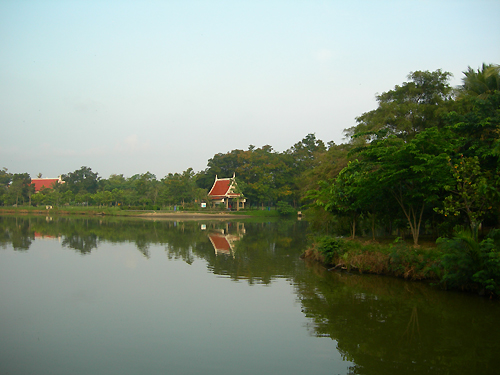
Showing posts with label Migration. Show all posts

Thursday, May 9, 2013

Thailand Birding: Common Shorebirds at Pak Thale & Laem Pak Bia

It is mid May now and all but a few of the commoner shorebirds have left Thailand and returned to their breeding grounds further north. However, I spent some time this week reviewing some photographs of the commoner shorebirds that I took at Pak Thale and Laem pak Bia earlier this year whilst leading a photography tour: Photography Tour of Thailand, March 2013.

Here are some of the photos that I obtained on the tour.

Wood Sandpiper

Temminck's Stint

Little Ringed Plover

Common Greenshank

Red-necked Stint

Usually some of the commoner shorebirds begin to return by the end of July; these are the non-breeders and birds that have failed at nesting. This is a good time to see some species in their breeding plumage, particularly Curlew Sandpiper.

Often by August or September Asian Dowitchers begin to pass through and by end of September shorebird numbers are really increasing as migration gets into full swing. Every year we wait for some of the rarer birds to return and usually they have shown by the end of October; the most awaited species is Spoon-billed Sandpiper and hopefully it will arrive again this year even though its numbers are very low now.

By early November all the speciality species of shorebirds have returned to Thailand and Spoon-billed Sandpiper, Nordmann's Greenshank, White-faced Plover and others can be found regularly. If you need any help finding them contact me: nickupton@thaibirding.com

Tuesday, April 16, 2013

Thailand Birding: Third Time Lucky?

With the weather conditions seemingly still good for finding grounded migrants I made my third trip in three days to Nakorn Sri Kuan Kan park. Arriving early at around 6.30am things were pretty dead on the migrant front; overcast skies were creating very humid conditions and with no sun to bring out the insects, bird activity was low. However, I had a chance to try and photograph some resident birds while waiting and got some shots of Vinous-breasted Starling.

Vinous-breasted Starling

Pink-necked Green Pigeons were in evidence again and a Green-billed Malkoha was among a flock of 12 Asian Koels sitting out in the open in a bare tree.

It took until about 9am for things to liven up and then some migrants showed, but mostly the same birds as I had seen on the previous two days, although some new arrivals did turn up. Today the total for Forest Wagtails was 3 and they were associating with an Eastern Crowned Warbler, 2 Black-naped Orioles, 1 Ashy Drongo, 1 Crow-billed Drongo, 1 Asian Brown Flycatcher and a female Yellow-rumped Flycatcher - a nice little party of migrating birds!

Once again there were quite a few Eyebrowed Thrushes and I saw a few flocks with a total of around 60 birds; not quite as many as yesterday but enough to get good views of a few.

At another spot some birds from the previous two days were still in the same place, including 1 male Yellow-rumped Flycatcher, 1 female Yellow-rumped Flycatcher, 1 Pale-legged Leaf Warbler, 12 Ashy Minivets and an Asian Brown Flycatcher which was aggressively chasing away other small birds.

Asian Brown Flycatcher

From the top of the bird watching tower I was able to get close up views of Ashy Minivet, Eyebrowed Thrush, 4 Dollarbirds, Pink-necked Green Pigeon and Brown-throated Sunbird. Several Chinese Pond Herons in breeding plumage were to be seen too as were two Javan Pond Herons also in breeding plumage. This bird is quite something in breeding condition, in contrast to its drab winter plumage.

I also added 1 Black-winged Cuckooshrike, 6 Black-naped Orioles and a male Mugimaki Flycatcher to my migrant list before stumbling into a Black Bittern in a swampy patch which was followed by a Malayan Night Heron! Unfortunately I only got brief views of this bird, which I have seen once before at this park, but I saw enough to be sure of its identification.

Another nice morning in the park, but it was not third time lucky in terms of finding a "lifer".

Monday, April 15, 2013

Thailand Birding: Sri Nakorn Kuan Kan Park Again

With rain all night I decided that it should be a good morning for grounded migrants and so went back to the park again this morning.

In terms of seeing different birds from yesterday it was a little disappointing, I was hoping for a new arrival of birds, but there was a good variety of species and a few surprises.

Many of the same birds were in the same places as the previous day with 1 male Yellow-rumped Flycatcher and 2 females, 1 subadult male Mugimaki Flycatcher, 1 Forest Wagtail, 4 Asian Brown Flycatchers, 12 Ashy Minivets, 2 Black-winged Cuckooshrikes, 1 Radde's Warbler, 1 Arctic Warbler all feeding in the same spots.

Yellow-rumped Flycatcher

A few things were different though with a flock of 40+ Eyebrowed Thrushes landing in the trees around the bird watching tower. I watched them for a long time hoping to find something rarer among them but to no avail. However, the highlight of the morning was a fantastic Chestnut-winged Cuckoo which landed quite close to me giving me a great view and the chance to take a really bad photo of it.

Chestnut-winged Cuckoo

Amazing what photoshop can do; as poor as it is now this photo was much worse before a lot of work in photoshop - completely out of focus and dark!

After another short rain shower a few more migrating birds showed up including a few that I had not seen the day before; 4 Blue-tailed Bee-eaters, 1 Taiga Flycatcher, 1 Oriental Honey-buzzard flying overhead plus a female Mugimaki Flycatcher to join the subadult male.

Other migrant species that I saw this morning in the park were; Chinese Pond Heron, Drongo Cuckoo, Crow-billed Drongo, Ashy Drongo, Black Bittern, Dollarbird, Pale-legged Leaf Warbler, Hair-crested Drongos, Black-naped Oriole and Barn Swallow.

There were two other suprises in the park for me this morning too a Common Hill Myna and 2 Red-breasted Parakeets. It would be tempting to put them both down as of escaped origin but with strong winds last night with a storm the Myna could easily have been blown in, and a population of Red-breasted Parakeets are in the Dusit area of Bangkok - very close as the Parakeet flies!

Resident species included very many Pink-necked Green Pigeons and Koels plus Laced Woodpecker, Stork-billed Kingfisher, Lineated Barbet plus Collared Kingfisher and just as I was leaving the park a flock of 150+ Eyebrowed Thrushes emerged from the trees and continued their northbound migration.

Sunday, April 14, 2013

Thailand Birding: Sri Nakorn Kuan Kan - More Migrants

With migration still underway I decided that another trip to Sri Nakorn Kuan Kan park was in order, particularly considering it is not far from where I live. I arrived a little too early, just before 6am, and found myself having to wait a little while for it to become light enough for birding.

By 6.15am, though, birds were active and close to the park gate I found the first of many passage migrants; 2 Eyebrowed Thrushes. I decided to get myself up the birdwatching tower early but on my way I got distracted by the many Pink-necked Green Pigeons that are always to be found in the park.

Pink-necked Green Pigeon

The top of the tower gives a good view over parts of the park and in half an hour I saw more migrant birds moving through and perched in trees; 2 Black-naped Orioles, 1 Crow-billed Drongo, 3 more Eyebrowed Thrushes, 3 Ashy Minivets, 1 male Japanese Sparrowhawk and 2 Dollarbirds.

When the activity started to die down I moved on to an area that always seems to attract birds and after a slow start I saw a singing Arctic Warbler, an Asian Brown Flycatcher and a male Green-backed Flycatcher. I have only ever seen the female of this rare bird before and interestingly that observation was in the same park almost exactly 2 years ago. I watched this bird for some time, failing to get even poor photos of it, before it was chased off by a male Yellow-rumped Flycatcher. A flock of 8 Ashy Minivets then showed up and a Black-winged Cuckooshrike gave itself away with its song, being joined by a second bird to feed with the minivets.

I decided to walk through some of the overgrown, swampy areas to see if any Black Bitterns had arrived and I had not walked more than 5 metres before flushing one into a tree.

I moved to another area with some trees that are always full of insects to see if that had anything different in store for me and this turned out to be one of the best spots in the park and I visited it three times finding 3 Asian Brown Flycatchers, 1 male and 2 female Yellow-rumped Flycatchers, 1 Drongo Cuckoo, 1 more Crow-billed Drongo, 1 Forest Wagtail, 1 female Black-winged Cuckooshrike, 5 Ashy Minivets and a female Mugimaki Flycatcher.

Between 8am and 9am things got a bit quiet but by hanging around I came across a second period of activity adding Shikra, another Forest Wagtail, Radde's Warbler, Pale-legged Leaf Warbler and another female Yellow-rumped Flycatcher to the migrant total; oh, and it is easy to forget that Chinese Pond Heron is a migrant too.

Chinese Pond Heron

I should also add that Sri Nakorn Kuan Kan park always has a few interesting resident species and Greater Racket-tailed Drongo, Vinous-breasted Starling, Stork-billed Kingfisher, Green-billed Malkoha and a pair of Laced Woodpeckers all showed themselves.

One final effort to see if any new migrants had arrived turned up a nice Indian Cuckoo which posed for a while - the first of the year for me - and the first Ashy Drongo of the morning, plus more Ashy Minivets, Asian Brown Flycatchers and several more Eyebrowed Thrushes flying overhead.

Indian Cuckoo

A pretty good morning of birding in the park!

Sunday, April 7, 2013

Thailand Birding: Migrants at Sri Nakorn Kuan Kan Park

Yesterday morning I paid a visit to Sri Nakorn Kuan Kan park, close to where I live in Bangkok. This spot can be very good for migrants at this time of year so I was hoping for some good birds passing through. As it turned out, although there were quite a few migrant species to be found, there were not the variety of species that I was hoping for and have seen in previous years; perhaps I just missed the peak migration days or maybe it was that the weather was fine, allowing birds to continue their journey.

On of the nicest migrants I saw was this Black Baza, a species which can often be seen passing through here.

Black Baza

I was lucky enough to be standing at the top of the birdwatching tower when this landed in a tree quite close to me. For the rest of the morning I kept seeing it as it chased other migrating birds around, in particular, a flock of Ashy Minivets.

Ashy Minivet

This flock of about 20 Ashy Minivets spent the whole morning feeding on insects attracted to a flowering tree and this proved to be the best spot with 1 Yellow-browed Warbler, 1 Arctic Warbler, 1 Drongo Cuckoo, 2 Black-winged Cuckooshrikes, 1 Radde's Warbler and a female hepatic morph Himalayan Cuckoo also frequenting it.

Other migrant species I saw included 5 Chinese Pond Herons, 1 Black-capped Kingfisher, 20+ Black-naped Orioles, 2 Crow-billed Drongos, 3 Ashy Drongos, 1 Hair-crested Drongo, 1 Eastern Crowned Warbler, 1 Pale-legged Leaf Warbler, 2 Taiga Flycatcher, 3 Asian Brown Flycatchers, 2 Shikras and 1 Hainan Blue Flycatcher.

Not too bad for a morning in a park but I was hoping for more in the way of flycatchers. Still, there were also a few interesting resident birds to see also with 2 Stork-billed Kingfishers, 50+ Pink-necked Green Pigeons, 1 Green-billed Malkoha and 2 Red-billed Blue Magpies, although the latter must surely be from escaped origin?


Friday, December 14, 2012

Thailand Birding: Black-legged Kittiwake

Today a trip to Laem Pak Bia sand spit turned up quite a surprise -a Black-legged Kittiwake!

Black-legged Kittiwake at Laem Pak Bia, digiscoped by Mr Daeng

As Mr Daeng landed his boat on the sand spit a group of gulls and terns took flight and as I looked at them through my binoculars I instantly realized that I could see a first winter Kittiwake. I called to Mr Daeng to take a look before it disappeared but luckily it landed back on the beach allowing us to look at it for more than 15 minutes; Mr Daeng used my camera and telescope to obtain the above photograph.

Eventually the bird flew out to sea not to be seen again either by us or the next group of birdwatchers who went out to the spit later in the day.

Tuesday, June 12, 2012

Thailand Birding: Fairy Pittas & A Polite Request

Between 9th and 16th April 2012 Philip Round made a trip to Ko Man Nai. in the Gulf of Thailand, in hope of ringing scarce migrants. He was successful in finding Thailand's second Fairy Pitta as well as at least 13 Japanese Paradise Flycatchers.

The news of this prompted quite a number of people to make the trip to Ko Man Nai in search of these birds and it appears that a few more Fairy Pittas were discovered. However, this influx of birders has caused a problem on the island and Phil Round requests that birdwatchers do not visit the island unless they have first obtained the relevant permission. Read Phil's request yourself - Please do not visit Ko Man Nai without first obtaining official permission.

This discovery suggests that both Fairy Pitta and Japanese Paradise Flycatcher are more frequent visitors to Thailand than previously thought and these, plus other rare visitors, may be found on similar islands in the Gulf during migratory periods. Migrants such as these that follow a more Eastern flyway than the commoner passage migrants in Thailand usually turn up in the first half of April.

Good luck in finding your own treasure trove of migrants during passage migration times.

Tuesday, April 10, 2012

Thailand Birding: Sri Nakorn Kuan Khan Park

On 3rd April 2012 I found myself with the rare opportunity to get out for a morning close to home. Having had great success in finding migrant species in April 2011 at Sri Nakorn Kuan Khan park, Bangkok, I decided to see if I could get lucky again.

Arriving at about 7am seemed a bit early as my first walk around revealed little other than a Forest Wagtail, a couple of Spangled (Hair-crested) Drongos and the odd Black-naped Oriole. However, a few nice resident birds included Pink-necked Green Pigeon and Stork-billed Kingfisher, both of which are commoner here than anywhere else I know in Thailand, as well as a male Laced Woodpecker.

Sri Nakorn Kuan Khan Park

On previous visits to Bangkok's parks, looking for migrants, I have noticed that most of the best observations seem to occur between 9am and midday, so I made another lap of the park.

Over the next few hours I came across several flocks of small migrant species which included 1 Drongo Cuckoo, 3 Crow-billed Drongos, 1 Lesser Racket-tailed Drongo (quite a surprise to me), 2 Black-winged Cuckooshrikes, 1 Eyebrowed Thrush (1 or 2 others heard passing overhead), 10 Black-naped Orioles, 3 Ashy Minivets and 1 Swinhoe's Minivet.

Also scattered around the unkempt parts of the park (towards the back) I came across a few flycatchers and Phylloscopus warblers which included 5 Radde's Warblers, 2 Pale-legged Leaf Warblers, 1 Arctic Warbler, 2 Yellow-browed Warblers, 3 dauurica Asian Brown Flycatchers, 1 siamensis Asian Brown Flycatcher plus 3 male & 1 female Yellow-rumped Flycatchers.

At around mid morning (10am ish) I spent 20 minutes at the top of the birdwatching observation tower, where I have spotted many interesting birds from before. As well as some common resident species I saw a few more passing migrants; a total of 13 Black Bazas and 2 Japanese Sparrowhawks as well as 2 Dollarbirds.


By midday I was very tired from walking around in the heat and humidity for 5 hours so decided to retreat to the air-conditioning of the car. On the way back I had time to add a Hodgson's Hawk Cuckoo to the list of migrants!

It seems that Sri Nakorn Kuan Khan park is an excellent place to find good numbers of migrating birds in April. I have never managed to get to the park during Autumn migration but I hope to put that right later this year.

Thursday, November 10, 2011

Thailand Birding: Migrants Still Returning

Migration continues throughout November and even into December in Thailand with different species having different migratory routes and times.

On the 9th November I revisited Pak Thale and Laem Pak Bia again and there were a few notable differences in numbers and presence of a few migratory species.

The those who are eager of the very latest Spoon-billed Sandpiper news, I saw 2 of this critically endangered species on salt pans at Pak Thale on 9th.

However, it was at nearby Wat Komnaram that I noticed a few interesting changes. Since my visit on 2nd November the number of Grey-headed Lapwings had dropped to 5 birds and the Black-headed Ibis numbers had decreased to 7. However, notable arrivals included more than 100 Red-throated Pipits that seemed to be passing through in the early morning and the arrival of 11 Garganey. Another interesting development were several oriental Skylarks singing when they had not been a week ago.

At nearby Laem Pak Bia I came across a total of 5 Richard's Pipits loafing around on dirt roads. This was a decline from at least 12 Richard's Pipits in the same location on 24th October. Most of these Richard's Pipits were significantly larger than the resident Paddyfield Pipits but the calls of all of them confirmed their identification.

Tuesday, December 2, 2008

Thailand Birding: Some Notes on Birdwatching in November

Throughout November I was away from home most of the time, visiting some of Thailand's best birdwatching locations with a number of visitors who provided some excellent company. The sites visited in November included Khok Kham, Laem Pak Bia/Pak Thale, Tung Bang Jak, Kaeng Krachan, Doi Inthanon, Doi Ang Kang, Huay Tung Tao and Doi Lang. All of these sites provided some of their specialities and one or two surprises.

November is a time of year that I have not done much birding in the past, so there were a few things I discovered that I will pass on here to others.

Generally, resident forest birds were rather quiet and difficult to find; this was particularly true around Ban Krang at Kaeng Krachan where woodpeckers, broadbills and kingfishers were almost impossible to locate. Local birders and rangers told me that they hadn't seen a broadbill for more than a month, however, towards the end of the month I did hear a pair of Banded Broadbills calling.

Despite resident birds being rather trickier than at other times, migratory birds were more rewarding. Although November is a little early for large numbers of migrants to be present, "falls" of migrants were quite obvious and it was interesting to turn up species that are either scarce passage migrants or winter visitors that were more active than normal because they had just arrived. At Doi Ang Kang, Bush Warblers were rather more active than at other times, with Aberrant Bush Warbler and 2 Manchurian Bush Warblers being seen. Perhaps they were busy feeding up after their long journey.

In the north Thrushes were beginning to arrive in small numbers and 2 Eyebrowed Thrushes were seen, 1 Dusky Thrush and 2 Black-breasted Thrushes. Also the Dark-sided Thrush had recently shown up at Mr Daeng's at Doi Inthanon and there was an arrival of caeruleus Blue Whistling Thrushes at Doi Inthanon on the 12th November.

In the lowlands things were exceptionally quiet at Huay Tung Tao with many of the regular birds being absent. There was no sign of Purple Sunbird, Lineated Barbet, Rufous-winged Buzzard, Bright-headed Cisticola or Chinese Francolin but the Wire-tailed Swallows were present.

November also saw the return of Nordmann's Greenshank & Spoon-billed Sandpiper to Pak Thale and Laem Pak Bia, with 1 Spoon-billed Sandpiper turning up at Khok Kham on 28th October. Any visitors coming to Thailand at the end of October/beginning of November would do well to visit Khok Kham as the bird always seems to turn up there first.

In the freshwater wetlands weavers and jacanas were in short supply, but plenty of other birds were to be found such as Reed Warblers, Spot-billed Pelican and Black-headed Ibis.

I hope that these random notes will be of some assistance to birders planning their trips to Thailand in the future.

Monday, October 6, 2008

Thailand Birding: Birds on the Balcony

Today I received an e-mail from Jorgen Eriksson with a very nice photo of a Blue Rock Thrush attached (see below).


Apparently this bird made Jorgen's back yard in Bangkok its winter territory last year and now it has returned for a second year. I am constantly amazed at how many species can exist in such an urbanised area as Bangkok, a sentiment shared by Jorgen in his e-mail to me. In fact, Bangkok has quite a high level of biodiversity due to its fairly haphazard development; many areas have patches of wasteland and unkempt corners and these along with small yards, balconies with plants and a few parks creates a number of foraging opportunities for birds.

Even in an area as busy as Sukhumvit and its side roads birds such as Plaintive Cuckoo, Plain Prinia, Brown Shrike, Common Iora, Scaly-breasted Munia, Olive-backed Sunbird and Coppersmith Barbet can be found.

Particularly at this time of year, when migration is in full swing Leaf Warblers, Flycatchers and Shrikes often turn up in gardens of shopping centres, restaurants, embassies as well as Bangkok's parks, making it worth keeping ones eyes open even the most central areas of the city, indeed, Bangkok is one of the best places for watching House Swifts in huge flocks an hour or so before dusk - try standing on Chidlom Skytrain station at 5.30pm and watch the House Swifts swooping around in front of you.

However, if you see any Weavers flying around in central Bangkok they were certainly victims of the release-birds-to-make-merit trade: Weavers for sale on Sukhumvit Road.

Thursday, September 25, 2008

Thailand Birding: Autumn Migration & Phuttamonton Park

Autumn migration is in full swing now and I have had a number of people sending reports of passage migrants in parks in Bangkok recently, including a Brown-chested Jungle Flycatcher in Suan Rot Fai. With reports of Yellow-rumped Flycatchers and Tiger Shrikes from a number of locations I decided to get out and look for some passage migrants myself.

Although Suan Rot Fai seemed to be producing some good birds and with a report of Grey-backed and Tiger Shrike in Lumphini Park heading to one of Bangkok's parks seemed like the thing to do, but then I remembered Phuttamonton. This is a huge park just outside the western bounds of Bangkok in Nakorn Pathom province and although it is largely manicured, it is so big that one can always find some unkempt areas that could attract passage migrants.

Resident Birds Phuttamonton Park is not particularly rich in resident species, playing host to mostly very common birds such as Common Myna, White-vented Myna, Cattle Egret, Indian Roller, Red-wattled Lapwing, Large-billed Crow, Paddyfield Pipit, Black-crowned Night Heron, Pied Fantail and Oriental Magpie Robin. Whilst I saw all of these there were a few other species that can always be found here that made for a fairly interesting day list. I found 3 Racket-tailed Treepies and a number of Green-billed Malkohas in mature open woodland as well as good numbers of Greater Racket-tailed Drongos, but probably the most interesting residents that I found were two groups of Small Minivets and Lineated Barbet; the Minivets were very obliging and I had excellent views. The Barbet is not that abundant at Phuttamonton but I had excellent views of one and heard a couple more; Coppersmith Barbet, however, is very common here.

 
Lineated Barbet by Johan Svensson

Migrant Species Whilst the residents were nice to see, it was migrants that I had made the trip for. At first it was slow with a few Asian Brown Flycatchers and Eastern Crowned Warblers but when I found some overgrown parts of the park I ran into a couple of mixed groups of migrating birds. In fact, every time I found a part of the park that had rough undergrowth remaining under the trees, there were migrants to be found. 

At the first spot I found a few Asian Paradise Flycatchers which were aggressively chasing a number of Eastern Crowned Warblers and an Arctic Warbler. Also a Crow-billed Drongo was getting a lot of aggressive attention from resident Black and Greater Racket-tailed Drongos. 

At a second stop I found 3 Pale-legged Leaf Warblers, detected by their "tink" call, along with a Plain-tailed Warbler, a Forest Wagtail and more Eastern Crowned Warblers and Asian Brown Flycatchers. 

However, when I found an area of bamboo gardens I found lots of birds. This area was swarming with mosquitos and I got badly bitten, but that is of course what had attracted the migrant birds. Here I found Siberian Blue Robin, Ferruginous Flycatcher, Chinese Blue Flycatcher, Hainan Blue Flycatcher, Taiga Flycatcher, more Asian Brown Flycatchers and Asian paradise Flycatchers, Yellow-rumped Flycatcher and more Eastern Crowned Warblers and Pale-legged Leaf Warblers - far more migrant species than I had expected.

 
Ferruginous Flycatcher by Peter Ericsson

Summary of Migrants Seen Here is a summary of all the migrant species I saw at Phuttamonton on 24/09/09. 

1 Ferruginous Flycatcher
1 female Yellow-rumped Flycatcher
1 female Chinese Blue Flycatcher
1 male Hainan Blue Flycatcher
10 Asian Brown Flycatchers
1 Taiga Flycatcher
6 Asian Paradise Flycatchers
1 female Siberian Blue Robin
1 Crow-billed Drongo
4 Brown Shrikes
1 Forest Wagtail
1 Arctic Warbler
5 Pale-legged Leaf Warblers
11 Eastern Crowned Warblers
2 Plain-tailed Warblers
20+ Yellow Wagtails
1 Chinese Pond Heron (Still in partial breeding plumage)
Many Barn Swallows

The One That Got Away One other interesting bird I saw was a White-crested Laughingthrush. This is one of my favourite species and I am always happy to see it but one doesn't really expect to see it in a park. This bird was alone, something that almost never happens to Laughingthrushes, and had no tail. Of course it was an escaped cage bird and, judging by its lack of tail and the nearby efforts of some workers to call it into be retrapped, it hadn't been free for long. Considering the terrible conditions that most birds are kept in in Thailand I hope that this one finds success in its freedom as many other White-crested Laughingthrushes have in and around Bangkok where there are a number of feral colonies.


Friday, September 19, 2008

Thailand Birding: Chulachomklao Fort

This morning I took a visit to Chulachomklao Fort at the river mouth of the Chao Praya in Samut Prakan province. There are some mangroves at this site but actually the location consists mainly of gardens, scrubland, wetland patches and buildings serving the Navy, in fact there is a pre WW2 warship there, many naval guns and a fort that fought a skirmish with the French Navy in the 19th century: Chulachomklao Fort.


However, it was birds I was after but things didn't turn out quite as well as hoped. Although there is a reasonable bit of mangrove boardwalk, which is in good condition, there were few birds in evidence. A few Pied Fantails, a couple of Golden-bellied Gerygones and lots of Collared Kingfishers were about all that was to be seen. Despite playing the call of Mangrove Whistler I neither saw nor heard one, although there seems to be enough mature mangrove remaining to support a few pairs. Common and Dark-necked Tailorbirds were also easily seen and as I was leaving the mangrove boardwalk I happened upon an Eastern Crowned Warbler - a passage migrant.

A Few Migrants
Indeed, the whole site has great potential for passage migrants, situated as it is at the mouth of a major river. Unfortunately I arrived too late in the day to pick up much migratory movement, although I did come across a few common migrants including 1 Brown Shrike, 3 Common Kingfishers, 2 Black-capped Kingfishers and a few waders; 3 Long-toed Stints, 5 Wood Sandpipers, 6 Common Sandpipers and 2 Little Ringed Plovers. Also worth noting was that out of 20-30 Pond Herons seen only 1 Chinese Pond Heron was still in breeding plumage and just 1 Javan Pond Heron - all the others were in winter plumage and unidentifiable.

Chinese Pond Heron

A few flooded areas of grassland produced a few nice birds including some more migrants, 3 Yellow Wagtails, as well as a few Great Egrets, Little Egrets, Cattle Egrets and 1 Intermediate Egret. Also in this area were 3 Blue-tailed Bee-eaters, an Indian Roller, 1 White-throated Kingfisher and a Paddyfield Pipit.

Although the birding was not spectacular, there were enough birds to make it interesting and alongside the ship, the fort and a decent seafood restaurant, this site is worth a visit - even if for just the once.

A pier goes out into the river but even just 1 hour before low tide there was no sign of any mud being exposed although the view out to sea produced many Whiskered Terns, Little Cormorants, a few Indian Cormorants and lots of Great Egrets.

By 1pm I decided it was time to quit and go home, but I always seem to find myself hunting down more birds and in this way I came across a Black-crowned Night Heron and 2 Brahminy Kites.

Public Transport
Public transport to this spot does exist but it would involve such a convoluted set of connections that I don't recommend trying. Come here in a taxi or your own vehicle and stay for a nice lunch.

Lots of Common Species
Although I didn't find many notable birds at Chulachomklao there were lots of birds to see. Brown-throated and Olive-backed Sunbirds were both common as were Oriental Magpie Robin, Streak-eared Bulbul, Scaly-breasted Munia, Asian Koel, Common Myna, White-vented Myna, Asian Pied Starling, Scarlet-backed Flowerpecker, Eastern Jungle Crow, Spotted Dove etc.; all the species that are common in any open-country and park situation.

Other Wildlife
Apart from birds I saw a number of large Water Monitors and two small parties of Long-tailed (Crab-eating) Macaques that were very nervous of humans - probably used to navy personel throwing stones at them. Additionally I happened upon a small green snake which fell out of a mangrove tree onto my shoulder before flicking itself off into the water: I don't know if it was me or the snake that was more shocked. One other bit of (unwelcome) wildlife were a lot of aggressive mosquitos.

Monday, February 26, 2007

The Start of Spring migration?

A breezy walk to Eske/Pulfin Fen was the first for a while due to the fact that I've been feeling pretty rough recently. Still with a fuzzy head I marched up to the lake, flushing a male Yellowhammer from underneath a bush with a few Skylarks in song.

At the lake still a lot of ducks; Wigeon, Mallard, Teal, Gadwall, Pochard and Tufted Duck. Two female Goldeneye on the river and a male on the lake were signs that winter is still not over and a male Pintail was another indication of that. However, a few recent arrivals also suggest that spring is on its way. Four Oystercatchers were squabbling over a territory and two Shelduck were also present. These two species are not present at Eske in the winter but do turn up in spring, with the Oystercatchers staying to breed.

Another nice bird was a Goldcrest singing and some male Chaffinches calling from a nearby copse were also convinced that spring is coming. I can only share their optimism and hope that some migrants might begin to pass through and liven things up - I've grown a little tired of the winter ducks. Notably, there were no Redwings or Fieldfares today and only small numbers of Blackbirds : it seems that they may have departed already.